Light as a Weapon: How Cult Directors Turned One Practical Effect Into an Entire Universe
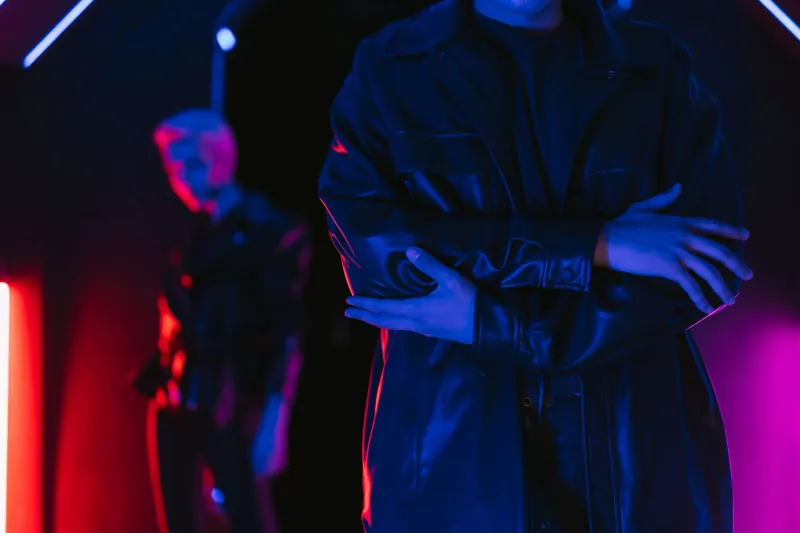
There's a moment in Blade Runner where a shaft of neon-pink light cuts through venetian blinds and lands on Harrison Ford's face like a brand. It lasts maybe three seconds. But it tells you everything about the world you're in — the claustrophobia, the decay, the strange, gorgeous rot of a future nobody asked for. That shot didn't come from a render farm. It came from a guy with a light rig, a roll of colored gel, and a very specific obsession.
That's the thing about the cult directors who built entire cinematic universes on shoestring budgets. They didn't lack resources and compensate. They used the lack as a design philosophy. Constraint wasn't the enemy — it was the engine.
The One-Trick Miracle
Ask any cinematographer who came up through the '70s and '80s and they'll tell you the same thing: figuring out your one signature practical effect was basically a survival skill. Studios weren't handing indie filmmakers blank checks. You had to pick your shot — literally. What's the single visual language you're going to build this whole thing around?
For John Carpenter, it was negative space and creeping shadow punctured by a single cold light source. Halloween, The Thing, Christine — they all operate on this principle. The monster isn't what you see. It's what the light refuses to illuminate. The practical effect isn't a creature or a prop. It's the absence of light, shaped with surgical precision.
For Dario Argento, it was the opposite — total chromatic overload. Suspiria famously used a discontinued three-strip Technicolor process to push reds and blues beyond anything that looked natural. The practical effect was almost chemical, happening at the film stock level before a single frame was processed. It cost him, but he built a world that literally could not exist anywhere else.
For Stuart Gordon working on Re-Animator or From Beyond, the trick was practical creature lighting — figuring out that if you bathed a latex monster in the right color temperature, the brain would accept it as real before logic could catch up. The uncanny valley problem? Solved by leaning into the wrongness rather than away from it.
The Analog Glow Philosophy
What connects all of these filmmakers isn't genre or budget or even aesthetic preference. It's a shared understanding that practical light tells the truth. When light hits a physical object — a face, a wall, a piece of wet pavement — it bounces in ways that are impossible to fully simulate digitally, even now. Shadows fall with a weight that CGI still struggles to replicate. Neon tubes flicker with a rhythm that's slightly biological, almost like breathing.
This is why cult cinema from this era hits different. You're not watching a simulation of a world. You're watching light actually behave inside a physical space. The camera is a witness, not a painter.
Directors like Kathryn Bigelow (before the blockbuster years), early David Lynch, and low-budget genre workhorses like Larry Cohen understood this intuitively. Cohen shot Q: The Winged Serpent on actual New York City streets with minimal permits, using the city's own ambient neon and sodium vapor lamps as his entire lighting budget. The result looks like no other monster movie ever made — grimy, alive, weirdly beautiful in the way that only real places can be.
Modern Disciples Still Chasing the Flicker
Here's what's interesting: the practical effect obsession didn't die with the analog era. It went underground, the same way cult cinema itself did, and it's been quietly influencing a new generation of filmmakers who grew up watching these movies on VHS and bootleg DVDs.
Directors like Ana Lily Amirpour (A Girl Walks Home Alone at Night) have spoken openly about building their visual language around a single lighting concept — in her case, the harsh, flat light of a practical work lamp turned into something almost expressionist by careful composition. S. Craig Zahler, who makes these dense, brutal genre films that feel like they were excavated from a different decade, is obsessive about practical light sources appearing in frame. If you can see the lamp, the logic goes, you believe the room.
Even in bigger productions, the influence bleeds through. The Duffer Brothers spent considerable time on the Stranger Things sets figuring out how to make practical neon and practical Christmas-light rigs do the heavy lifting rather than relying on post-production color grading. The result has that same slightly-wrong warmth that Carpenter and Argento were chasing four decades earlier.
The Economics of Obsession
There's also a practical argument here that doesn't get made enough: building your film around one signature practical effect is just smarter filmmaking from a budget standpoint. When you commit to a single visual language, every decision filters through that lens. You're not trying to do everything — you're trying to do one thing with total conviction.
Carpenter has talked about this in interviews. When you have $300,000 to make a movie, you can't afford to experiment broadly. You find your thing, you drill down, and you make it work harder than anyone thought possible. The limitation produces clarity. The clarity produces iconography. And iconography, as it turns out, is what makes a cult film stick.
The films that get passed around, that develop these fierce, multigenerational fan communities, are almost never the ones that tried to do everything. They're the ones that did one thing so specifically, so stubbornly, that it became impossible to forget.
Why It Still Matters Here at the Club
At Neon Reels Club, we talk a lot about the feeling of cult cinema — that particular charge you get watching something that was made with total conviction and zero compromise. A lot of that feeling comes from exactly this: the physical reality of practical effects, the evidence of human problem-solving baked into every frame.
You can feel the difference between a world that was built and a world that was rendered. The built worlds have texture, imperfection, the slight wrongness of something that exists in three dimensions and was lit by actual photons bouncing off actual surfaces.
The directors who figured this out early — who turned constraint into a kind of superpower — didn't just make great movies. They built the visual grammar that half of modern cinema is still speaking, whether it knows it or not. Next time you're watching something and a shot hits you somewhere deep, before you can explain why, check the light. There's a decent chance someone figured out a very specific, very stubborn practical trick a long time ago, and you're still living inside their solution.