Before the Algorithm Dressed You: How Cult Sci-Fi B-Movies Invented the Aesthetic Gen Z Thinks It Discovered
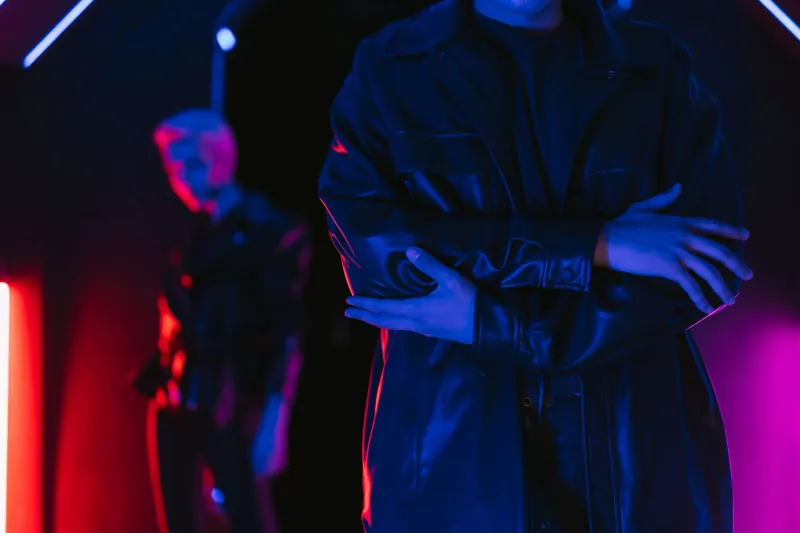
Pull up any major streetwear brand's lookbook from the last three years and you'll notice something. Acid-washed synthetics. Fractured neon gradients. Silhouettes that look like they were designed for a city that hasn't been built yet. It all feels impossibly current — until you realize you've seen it before. Not on a runway. On a VHS tape, probably taped over a football game, probably found at a Goodwill in 1994.
The cyberpunk aesthetic that's eating Gen Z fashion whole didn't originate on Pinterest boards or in the design labs of Balenciaga. It was assembled, frame by frame, on shoestring budgets in Los Angeles and Tokyo and Toronto, by directors who couldn't afford real sets and costume designers who were basically shoplifting from army surplus stores and auto-body shops. The result was something nobody expected to last — and yet here we are.
The Rack Was a Set, and the Set Was a Prophecy
Consider Circuitry Man (1990), a film that most people haven't heard of and that deserves a full retrospective just on the basis of its wardrobe alone. Characters moved through a post-apocalyptic underground draped in layered latex, studded leather, and translucent plastics — materials that would look completely at home in a current AREA New York collection. The film had almost no budget. The costumes were improvised. And somehow, they nailed it.
Or look further back at Liquid Sky (1982), the Manhattan-shot alien-drug-fashion fever dream that essentially invented the visual vocabulary of androgynous club wear two decades before it hit the mainstream. Cultural historian and cult film archivist Dana Mercer, who runs a private screening series out of Chicago, puts it plainly: "These filmmakers weren't predicting the future. They were desperate. But desperation plus vision produces something that commercial fashion, with all its market research, just can't replicate. It produces instinct."
That instinct — raw, unfiltered, and operating completely outside industry gatekeeping — is exactly what makes these films such a rich source code for contemporary style.
Neon as a Political Statement, Not a Color Palette
Here's what gets lost when luxury brands strip-mine the cyberpunk aesthetic for seasonal campaigns: the neon wasn't decorative. It was a signal flare.
In the low-budget sci-fi films of the mid-1980s through the early 1990s, neon light carried meaning. It marked territory. In those fictional dystopias — overcrowded, surveilled, corporatized — neon was the last tool left for individual expression. Characters wore it, lived under it, were defined by it because everything else had been standardized and controlled. The visual language was explicitly anti-establishment.
Fashion designer Marcus Tillman, whose Brooklyn-based label Greyzone has been cited by several publications as a leading voice in contemporary cyberpunk-adjacent streetwear, talks about this disconnect with real frustration. "When I reference Hardware [the 1990 British cult film] or Nemesis in my collections, I'm not doing nostalgia," he says. "I'm pulling from a political tradition. Those films were angry. The clothes in them were angry. When a fast fashion brand does the same aesthetic, they've removed the anger and just kept the glow."
That glow, divorced from its original context, is everywhere right now. TikTok's most-viewed fashion content regularly features neon underlighting, reflective fabrics, and what the algorithm has taken to calling "dark city" aesthetics. Most of the creators producing this content have never seen Freejack, Split Second, or Demolition Man — films that were essentially designing these exact looks for characters living in nightmares that look increasingly like Tuesday.
The Costume Designers Nobody Remembered to Credit
One of the most striking things about tracing this lineage is how invisible the original architects remain. The costume designers who built these worlds — often working with budgets measured in hundreds rather than thousands of dollars — are almost never cited when contemporary designers talk about their influences. They're the uncredited source code.
Take the work done on Class of 1999 (1990), where costume choices blended military surplus with modified athletic wear and industrial hardware in ways that map almost perfectly onto current tactical streetwear trends. Or the layered, deconstructed silhouettes in Trancers (1984), which feel less like period costuming and more like a mood board someone at a major sportswear brand is currently presenting in a conference room.
Mercer argues that this invisibility is partly structural. "B-movies didn't get the cultural documentation that big-budget films did. There are no 'making of' features, no coffee table books about the costume design. So when the aesthetic resurfaces, it resurfaces without attribution. The influence is real but the credit goes nowhere."
For collectors and cult cinema obsessives — the kind of people who've been rewinding these tapes for thirty years — there's something both vindicating and maddening about watching the mainstream catch up without acknowledging the source.
Gen Z Found the Signal, But Missed the Frequency
To be fair to the current generation of fashion consumers, they didn't invent the erasure of this history. They inherited it. The pipeline from obscure cult film to mainstream aesthetic has always run through a kind of cultural laundering — underground to subculture to streetwear to luxury to mass market — and by the time something reaches TikTok, its origins are usually three or four transformations removed.
What's interesting is that some younger designers are actively working to reconnect with the source material. Tillman describes a growing community of designers in their mid-twenties who are deliberately hunting down the original films, watching them not for entertainment but for research. "They're treating Cyborg and Nemesis the way design students used to treat Bauhaus," he says. "As primary documents."
That's a development worth paying attention to. When a generation starts going back to the archive with genuine curiosity rather than just aesthetic appetite, something more interesting than trend recycling can happen. The anger that Marcus Tillman talks about — the political charge that made those neon-lit dystopias feel urgent rather than decorative — might actually make it back into the clothes.
The Bin Was Always the Blueprint
At Neon Reels Club, we've said it before and we'll keep saying it: the discount bin is where the real prophecies live. The films that nobody distributed properly, that got buried under studio releases and forgotten in video store back rooms, have been quietly shaping visual culture for decades. The cyberpunk streetwear boom is just the latest proof.
The neon wasn't decorative then. It shouldn't be decorative now. And somewhere in a crate at an estate sale or a cardboard box in a storage unit, there are more tapes — more costume designers who built futures out of nothing, more directors who accidentally made mood boards for movements that wouldn't exist for another thirty years.
The algorithm didn't dress you. A broke visionary with a heat gun and a bolt of reflective vinyl did. Give them their flowers.