Frame by Frame: How Cult Directors Accidentally Designed the Visual Rulebook That Runs Your Feed
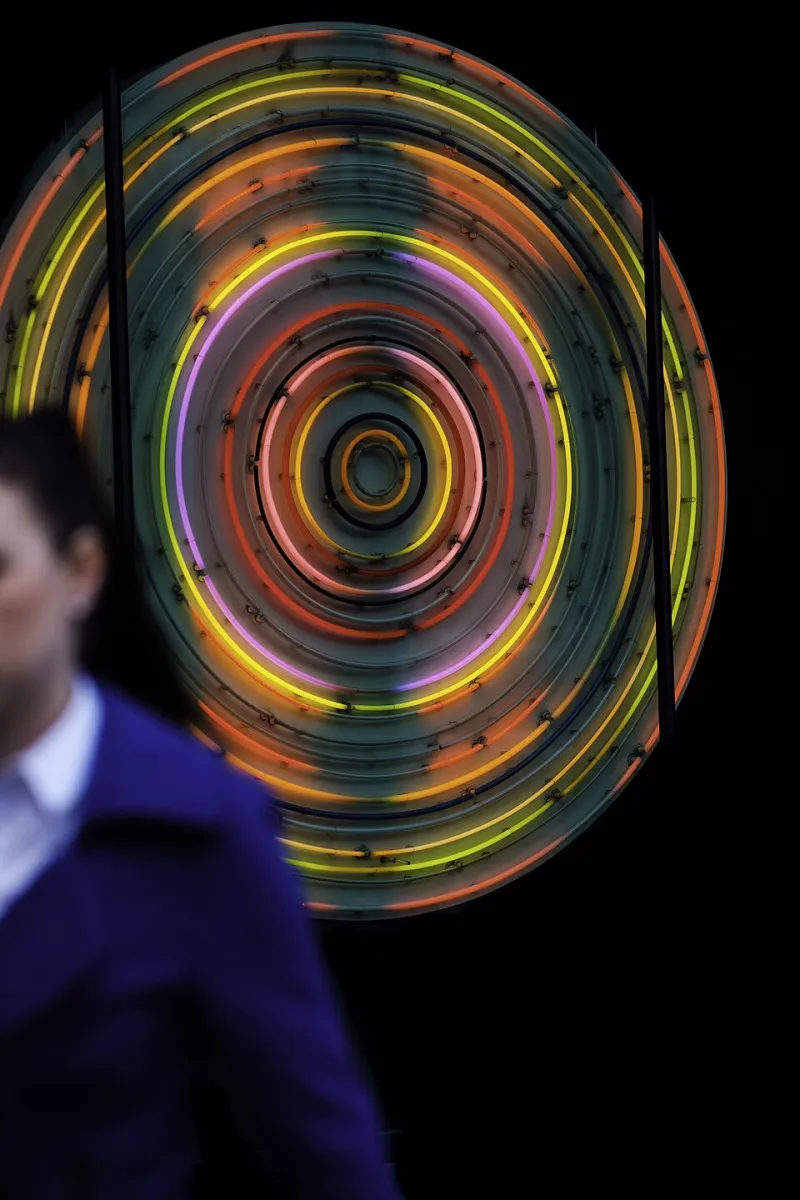
Photo: Brandon Wong mrbw, CC0, via Wikimedia Commons
Somebody in a Silicon Valley design lab is getting credit for something a broke filmmaker figured out in a warehouse in 1979. That's basically the story of modern social media aesthetics — a story that starts on grainy celluloid, runs through neon-lit VHS tape, and ends on a screen you're probably holding right now.
The connection isn't coincidence. It isn't nostalgia either. It's something closer to inevitability. When you strip away the algorithms and the engagement metrics, what social media platforms are really doing is solving the same problem those cult directors were solving on shoestring budgets decades ago: how do you make someone look and keep looking?
The Oversaturation Secret
Pick almost any cult film from the late 1970s or early 1980s — the kind that played midnight shows in Times Square before Times Square got cleaned up — and you'll notice the color does something unusual. It doesn't represent reality. It amplifies it.
Directors like Dario Argento weren't just throwing gels on lights for atmosphere. They were engineering a physiological response. Oversaturated reds and electric blues hit the eye differently than natural tones. They create a low-level urgency, a visual tension that keeps the brain slightly activated. Argento's work, particularly Suspiria, reads almost like a color theory dissertation when you watch it frame by frame — a relentless push-pull between complementary hues that refuses to let your visual cortex settle.
Now open Instagram. The platform's internal research has long pointed toward high-saturation content outperforming muted palettes in the first three seconds of a scroll stop. The color psychology at work is identical to what Argento was doing by instinct. The difference is that Instagram measured it in A/B tests. Argento measured it in screams.
Negative Space as a Trap
Here's a technique that doesn't get talked about enough in the cult film conversation: deliberate emptiness. A lot of those low-budget genre films from that era had to be creative about what they didn't show — partly because they couldn't afford to fill every frame, and partly because the good directors realized that empty space creates anticipation.
Watch the early work of directors like Larry Cohen or the stranger corners of the American International Pictures catalog. There are shots that linger on negative space in ways that feel almost uncomfortable. A character dwarfed by an enormous blank wall. A product or object isolated in the center of the frame with nothing competing for your eye.
That compositional instinct maps almost perfectly onto modern platform UI design. TikTok's interface strips everything peripheral away from the video itself. The content floats in a kind of designed void. Pinterest built an entire visual philosophy around the breathing room between images. The negative space isn't empty — it's a psychological container that tells your brain: this thing matters, there is nothing else right now. Cult filmmakers were building those containers long before the UX industry had a name for the technique.
The Flicker and the Hook
One of the stranger threads connecting cult cinema to social media is the flicker effect. Practical lighting in low-budget productions flickered constantly — fluorescent tubes, neon signs, practical bulbs on unstable rigs. What could have been a production flaw became a signature. The flicker creates micro-interruptions in the visual field. Your brain, wired to respond to sudden changes in light as potential threats, snaps to attention each time it happens.
Filmmakers like William Lustig and early-era Abel Ferrara leaned into this instead of correcting it. The result was an almost hypnotic visual rhythm that kept viewers in a state of low-level alertness. It's uncomfortable in the best possible way — you can't fully relax, so you can't look away.
Autoplay on every major streaming platform uses the same neurological lever. The instant a video ends and another begins, there's a brief flash of transition — a designed flicker. TikTok's infinite scroll creates a version of this effect vertically, with each swipe producing a visual interruption that resets your attention clock. The mechanism is digital. The principle is straight out of a flickering neon sign outside a 42nd Street theater.
Framing the Subject Like a Poster
Cult cinema from this era had to sell itself on a single image — the VHS box, the one-sheet, the lobby card. That constraint forced directors and their cinematographers to think in terms of iconographic framing. Every important shot had to work as a standalone image, stripped of context, hitting immediately.
That's exactly the grammar of a social media grid. Your Instagram profile is a collection of lobby cards. Your TikTok thumbnail is a one-sheet. The instinct to make every frame self-contained and visually complete — to compose for the single image rather than the sequence — is something those cult filmmakers developed out of pure commercial necessity.
Directors who came up through exploitation and genre work understood that you were always selling the image twice: once as part of a story, and once as a static artifact that had to make a stranger stop walking past a video store shelf. That double-sell mentality is essentially the logic of every piece of content optimized for a social feed.
Why It Matters That Nobody's Talking About This
The cult film community has spent years making the case that these movies deserve serious aesthetic consideration — not just as camp artifacts or nostalgia objects, but as genuine works of visual craft. The social media connection is one of the strongest arguments available, and it's barely been made.
When a platform designer talks about "visual hierarchy" or "thumb-stopping content," they're using the professional vocabulary of a field that reverse-engineered techniques these directors were practicing in 1978. The academic lineage almost never gets acknowledged, partly because the people building these platforms didn't grow up watching Suspiria at a midnight screening in Philadelphia.
But the visual DNA is there. Frame by frame, color by color, flicker by flicker — the rogue directors who built cult cinema's aesthetic language were laying the groundwork for the attention economy decades before anyone thought to monetize a scroll. They didn't get a cut of the profits. They rarely got the credit.
What they got was a permanent place in the visual unconscious of anyone who's ever stopped mid-scroll because something just looked different. That's the neon signal still broadcasting. You just have to know what frequency to tune into.