They Saw It Coming: Cult Directors Who Mapped Our Digital Nightmare Decades Early
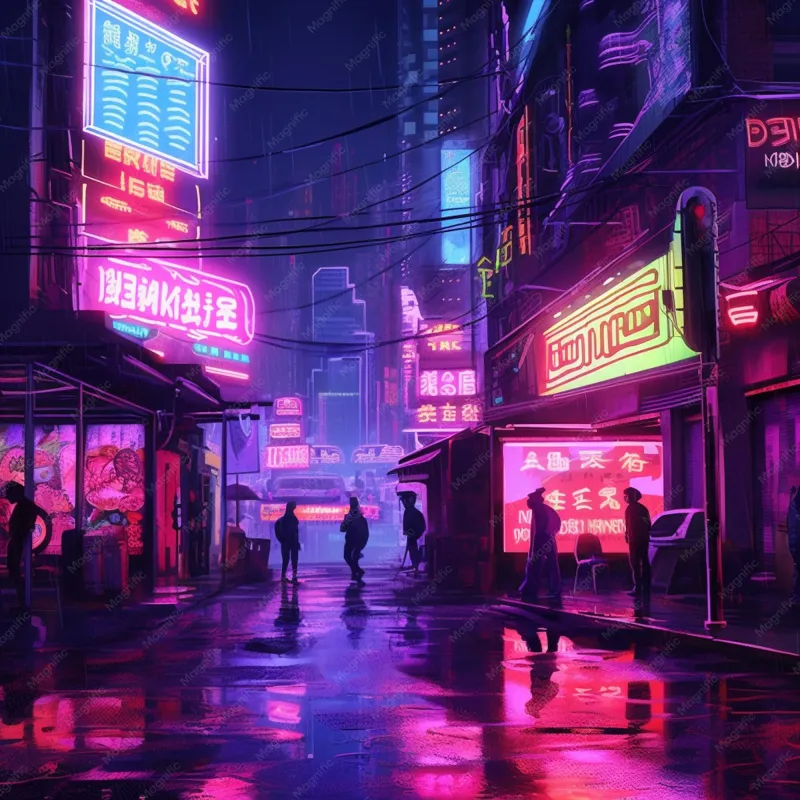
Photo: neon lit cyberpunk city street night retro 80s aesthetic, via img.freepik.com
There's a specific kind of unease you feel when an old movie hits too close to home. Not the jump-scare kind — something slower, creeping up your spine while you're watching a film from 1992 on a cracked Blu-ray at 1 a.m. You pause it, stare at the screen, and think: how did they know?
That's the experience waiting for anyone willing to dig into the overlooked corners of 80s and 90s cult cinema. While Hollywood was busy churning out blockbusters and critics were busy ignoring anything that smelled like genre pulp, a loose coalition of obsessive, underfunded, visionary directors was quietly building a map of the world we now live in. They called it science fiction. We call it Tuesday.
Dismissed as Campy, Vindicated by History
Let's be honest: a lot of these films looked cheap. The synth scores were a little too loud, the neon a little too saturated, the dialogue a little too on-the-nose. That surface-level weirdness gave mainstream critics an easy excuse to file them under "cult curiosity" and move on. What those critics missed — and what modern audiences are slowly waking up to — is that the weirdness was the point.
Take directors like Kathryn Bigelow's oft-overlooked Strange Days collaborators, or the singular orbit of someone like Abel Ferrara, whose 1992 film Body Snatchers reframed the classic alien-invasion metaphor as a story about conformity pressure and the erasure of individual identity. Sound familiar? It should. Scroll through any social media platform for ten minutes and you'll find a thousand versions of that exact horror playing out in real time.
Or consider the deeply strange, deeply underappreciated work coming out of the early 90s direct-to-video cyberpunk scene — films like Cyberjack, Nemesis, and the Albert Pyun catalog, which critics dismissed as bargain-bin noise but which were actually working through genuine anxieties about corporate surveillance, identity theft, and the commodification of human bodies. Pyun in particular was obsessed with the idea of humans reduced to hardware — flesh as software, emotion as exploitable data. That wasn't campy. That was prescient.
The Surveillance Paranoia Pipeline
If there's a single thread connecting the most prophetic of these films, it's surveillance. Not the Cold War-era paranoia of someone watching you from a government building — something more ambient, more personal, and far more insidious.
Brian Yuzna's output from this era, often lumped in with schlocky horror, actually contains some of the sharpest commentary on class visibility and social performance ever committed to low-budget film stock. His characters are constantly being watched — by systems, by hierarchies, by the invisible machinery of status. Replace "the upper class" with "the algorithm" and you've got content that could've been written last week.
Then there's the frequently cited but rarely watched work of directors like Mark L. Lester, whose Class of 1999 (1990) imagined schools run by decommissioned military robots reprogrammed as teachers. It played as satire at the time. Now, in an era of AI-assisted grading software and facial recognition in classrooms, it plays as a documentary you weren't supposed to see.
Why Nobody Listened
So why did mainstream audiences tune these films out? Part of it is timing. The late 80s and early 90s were economically optimistic in a very specific, surface-level American way. The Cold War was ending. Technology felt exciting and friendly. The internet was something you heard about in magazines, not something you feared. A movie warning you that screens would one day hollow out human connection sounded like paranoid fantasy from someone who needed to go touch grass.
The other part is distribution. Most of these films never made it to major theater chains. They lived on VHS rental shelves in the back corner of the store, next to the horror section, in sleeves with airbrushed art that looked more like a metal album cover than a serious cinematic statement. That packaging told audiences: this is disposable entertainment. And audiences believed the packaging.
Collectors and archivists have been fighting that perception for years. Boutique labels have started rescuing some of this material — restored transfers, new interviews, liner notes that reframe these films as the cultural artifacts they actually are. But the broader cultural reckoning hasn't happened yet. Most of these directors still don't have Wikipedia pages that do them justice.
What You Can Actually Do With This
Here's the thing about watching these films now, in 2025: they hit differently because you hit differently. You've lived through the social media decade. You've felt the surveillance creep. You've watched recommendation algorithms shape your tastes in ways you didn't fully consent to. You are, in many ways, the character these directors were warning you about.
That's not a comfortable realization. But it's a productive one.
Revisiting films like Brainscan (1994), Virtuosity (1995), or even the deeply weird Arcade (1993) with fresh eyes isn't just a nostalgia exercise. It's a kind of media literacy — a way of understanding how cultural anxieties get processed and projected through genre filmmaking, and why the stuff that gets labeled "fringe" often contains the most honest commentary on where society is actually headed.
The directors who made these movies weren't prophets in any mystical sense. They were just paying attention. They were watching the tech industry's promises with skepticism, tracking the erosion of privacy with alarm, and noticing the way screens were already beginning to mediate human experience in ways that felt subtly wrong.
They put all of that on film. Mainstream culture shrugged. And then the future arrived, right on schedule.
The Neon Was Always a Warning Sign
There's a reason so much of this cinema is drenched in neon. Those colors aren't just aesthetic choices — they're the visual language of artificiality, of surfaces that glow because they have to, of beauty that's manufactured and slightly dangerous. The neon in these films isn't glamorous. It's a symptom.
If you're new to this corner of cult cinema, start with the films that make you uncomfortable in ways you can't immediately explain. The ones that feel like they're set in a future that already happened. Trust that feeling. These directors earned it.