Digging for Frames: How a New Generation of Film Hunters Is Rescuing Cinema from the Dust
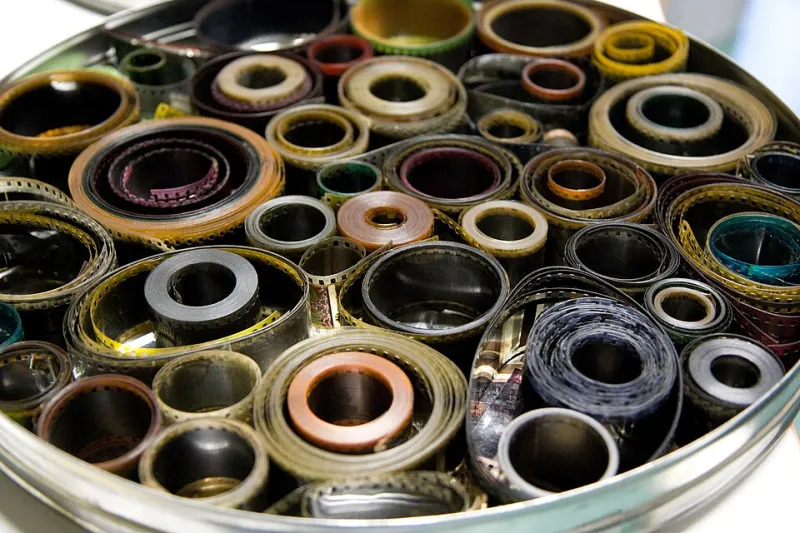
Photo: Marcel Oosterwijk from Amsterdam, The Netherlands, CC BY-SA 2.0, via Wikimedia Commons
They show up at estate sales with flashlights and film-can ID charts. They bid on mystery lots from closed video stores. They spend weekends in other people's attics, chasing the possibility that something nobody has seen in forty years might be sitting in a cardboard box under a water-damaged mattress. Meet the neon archaeologists of American cinema.
This isn't a hobby that gets a lot of mainstream attention. It doesn't have the visual glamour of record collecting or the nostalgia-market money of vintage comics. But the people doing it will tell you, without hesitation, that what they're hunting for matters more than any of that — because unlike a scratched LP or a creased issue of Amazing Fantasy, a film print that disappears is gone in a way that feels genuinely irreversible.
The Archaeology Metaphor Isn't an Accident
Talk to enough film hunters and you start hearing the same language: excavation, recovery, preservation, rescue. These aren't people who think of themselves as collectors in the hobbyist sense. They think of themselves as doing something closer to conservation work — and the urgency they feel is proportional to how much has already been lost.
The numbers are sobering. Film historians estimate that roughly 70 percent of all silent films are gone forever. The survival rate for early sound films isn't much better. And that's before you get into the enormous gray zone of regional exploitation films, direct-to-video releases, foreign imports with limited US distribution, and low-budget genre work from the '60s through the '90s that never got digitized and exists now only in whatever physical copies managed to survive.
"Every estate sale is potentially the last time that film exists anywhere," says Marcus T., a collector based in Cincinnati who has spent the better part of a decade attending estate auctions and liquidation sales across the Midwest. "You have no idea what you're going to find. That's terrifying and exciting at the same time."
Where the Finds Actually Happen
The romanticized version of film discovery involves dramatic moments in forgotten archives — a researcher pulling a can off a shelf and realizing they're holding the only surviving print of something significant. That does happen. But a lot of the real action is considerably less cinematic.
Estate sales are the most reliable hunting ground. When a projectionist dies, when a small-town theater closes, when a retired drive-in operator's family clears out a storage unit — film cans surface. They're often mislabeled, sometimes unlabeled, occasionally stored in conditions that have done serious damage to the print inside. Part of the skill set is being able to assess a can quickly: checking for the acrid smell of vinegar syndrome in acetate film, reading faded labels, recognizing distributor markings that might indicate the print's origin and age.
Abandoned video stores have become another major source in recent years. As the last surviving rental shops close — and they are still closing, one by one, across small-town America — their inventory often ends up in bulk lots at auction. Most of it is common VHS. But mixed in, occasionally, are 16mm prints, promotional materials, or foreign-format releases that never made it to domestic home video.
Online, there are forums and private groups where collectors share tips, trade information about upcoming sales, and sometimes coordinate on acquisitions that are too large or too expensive for any one person. The community is small enough that reputations matter enormously — people who misrepresent what they have, or who acquire prints without any intention of preserving them, get known quickly.
The Find That Changes Everything
Ask any serious film hunter about their best discovery and you'll get a story that sounds almost too good to be true. Marcus found a 35mm print of a regional horror film shot in rural Kentucky in 1973 that had never been commercially released — the production company folded before distribution was arranged, and the print had been sitting in the original director's garage ever since. It's now been digitized and deposited with a regional film archive.
In Phoenix, a collector named Diane R. pulled a 16mm print of an unreleased Italian giallo from a storage unit that had been abandoned by a deceased film importer. The film had been listed as lost in multiple reference databases. She spent eight months tracking down the rights situation before arranging for a proper transfer and making contact with the director's family in Italy.
These stories circulate through the community like folklore. They're motivating, but they also create a slightly unrealistic expectation for newcomers. For every dramatic discovery, there are hundreds of hours spent sorting through water-damaged boxes of common titles, bidding on lots that turn out to contain nothing interesting, and driving long distances for estate sales that yield nothing at all.
The Practical Side of the Hunt
For anyone who wants to get into film hunting seriously, the experienced collectors have some consistent advice. Start with 16mm — it's more common than 35mm, cheaper to store, and the equipment to play it is more accessible. Learn to identify film formats by the can and the reel. Get familiar with the major distributor markings and catalog numbers from the key decades. Build relationships with estate sale companies in your area, and let them know what you're looking for — many will call ahead when they see film cans in a collection.
The other thing that comes up constantly is the importance of knowing what to do after you find something. Acquiring a print is only the beginning. Proper storage, assessment of the film's condition, decisions about digitization — these require knowledge and sometimes significant expense. Several collectors point to the work of organizations like the Academy Film Archive and the UCLA Film & Television Archive as models, and many have developed working relationships with institutional archives to ensure that significant finds end up somewhere they'll be properly maintained.
"The goal isn't to own it," says Diane. "The goal is to make sure it survives. If that means donating it to an archive, that's a win. That's the whole point."
Why It Matters Now
There's a clock running on a lot of this material. Acetate film degrades. Magnetic tape deteriorates. Video formats that were common in the '80s now require equipment that's increasingly hard to find and maintain. Every year that passes without a find being made, assessed, and properly preserved is a year closer to that material becoming unrecoverable.
The film hunters know this. It's what gets them out of bed at five in the morning to drive three hours to an estate sale in rural Indiana. It's what keeps them bidding on mystery lots and spending weekends in other people's attics. They're working against time, against entropy, against the general indifference of a culture that tends to assume that if something isn't on a streaming platform, it probably wasn't worth watching anyway.
They know better. And somewhere in a cardboard box in a garage or a storage unit or the back room of a closed video store, the next discovery is waiting for someone who knows how to look.